
Kitten food is higher in calories, protein, and nutrients; adult food maintains weight.
Choosing between kitten food vs adult cat food can feel confusing, especially when every bag promises the best for your pet. As a pet nutrition writer and lifelong cat parent, I have seen how the right choice at the right time can change a cat’s energy, growth, and long-term health. In this guide, we will unpack kitten food vs adult cat food with clear tips, evidence-based advice, and real-world examples you can use today.
What actually changes from kitten to adult?
Kittens grow fast. Their bodies need extra fuel for bones, muscles, brain, and immune health. Adult cats need steady energy without weight gain. That is why kitten food vs adult cat food is not a marketing trick. It is about life stage nutrition.
Here is the simple picture:
- Kittens need more protein, fat, and calories.
- Adults need controlled calories with balanced minerals.
- Growth diets support development. Adult diets support maintenance.
Veterinary nutrition standards define two main profiles. One is growth and reproduction. The other is adult maintenance. Your cat’s needs shift as they move from one to the other.
Nutrition differences explained
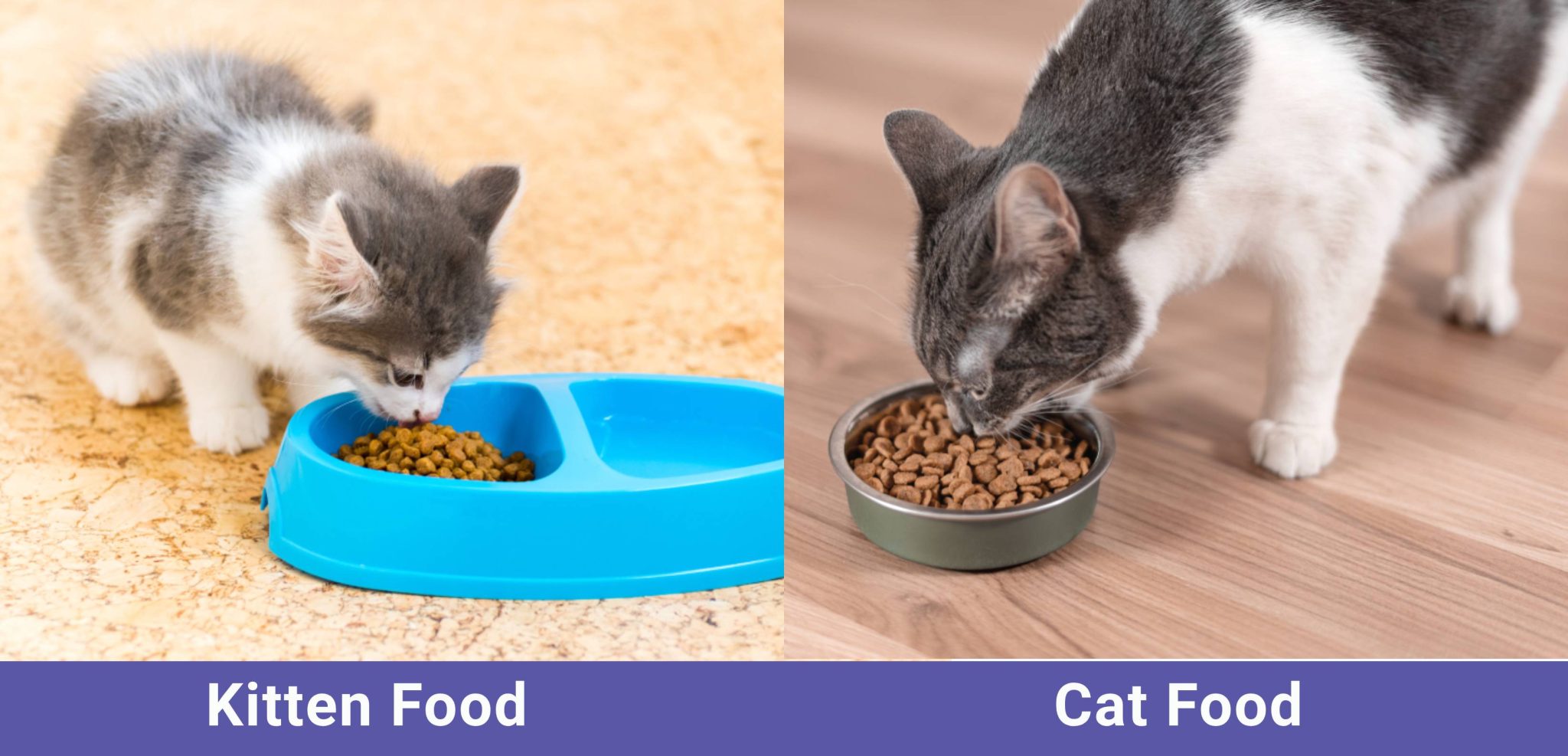
The heart of kitten food vs adult cat food comes down to nutrient density and balance.
Protein
- Kittens need more total protein and more essential amino acids.
- Animal protein supports muscle growth and immune health.
Fat and calories
- Kitten food has more fat and energy per cup.
- Adult food limits calories to help prevent weight gain.
Calcium and phosphorus
- Kittens need a higher, precise ratio for bone growth.
- Too much or too little can harm bone development.
DHA and choline
- Brain and vision development need DHA and key nutrients.
- Many kitten foods add fish oil and supportive nutrients.
Vitamins and minerals
- Growth formulas pack more micronutrients per calorie.
- Adult foods aim for maintenance levels to avoid excess.
These needs are not guesses. They are set by veterinary nutrition standards and supported by research on growth and weight control. When you compare kitten food vs adult cat food on the label, these are the levers that change.
How to read labels the smart way
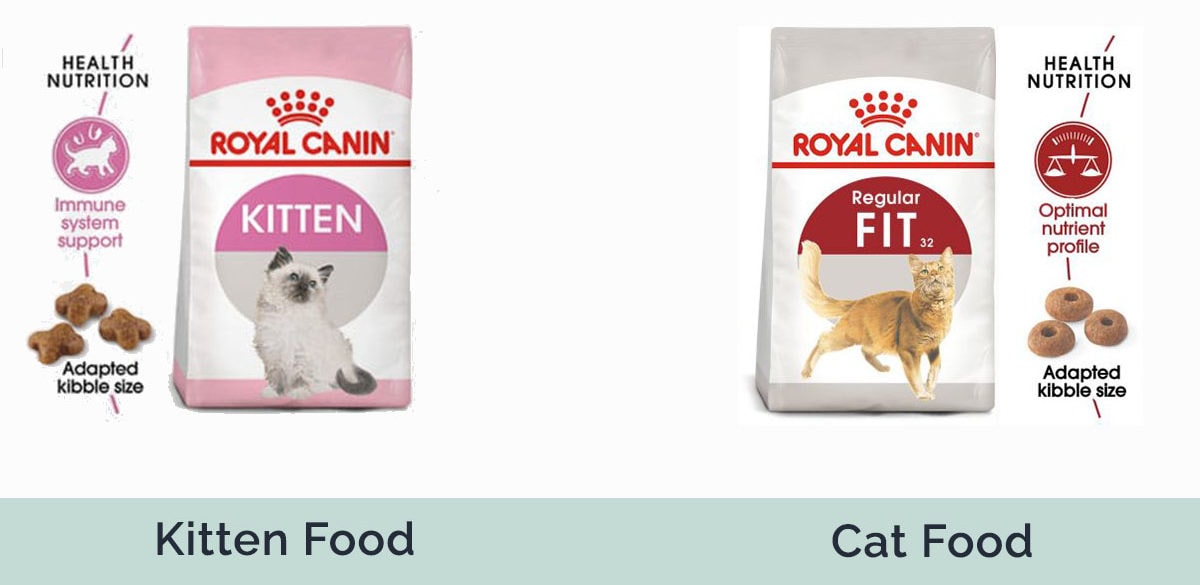
When you pick kitten food vs adult cat food, do not stop at the front of the bag. Flip it over and look for three key items.
- Life stage statement. Look for a statement that the diet meets growth or adult maintenance. Some foods say all life stages, which meet growth needs by default.
- A feeding trial or formulation statement. Feeding trials are ideal. Formulation is common and still valid.
- Calorie content per cup or per can. This helps you feed the right amount.
Helpful label checks
- Protein listed first and from animal sources.
- Clear fat content and no vague terms.
- Added DHA for kittens, especially in early growth.
- Avoid long lists of fillers and sweeteners.
These checks help you choose well beyond marketing buzzwords.
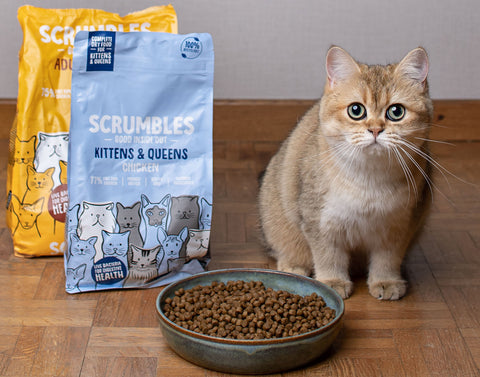
Feeding plans by age and life stage
Your plan should match the life stage. Use this simple timeline for kitten food vs adult cat food.
0 to 4 months
- Feed kitten food with higher protein and fat.
- Offer three to four small meals a day.
- Wet food helps hydration and tiny mouths.
4 to 12 months
- Keep kitten food.
- Feed two to three meals a day.
- Monitor weight and adjust portions.
12 months and older
- Transition to adult cat food over 7 to 10 days.
- Feed two meals a day for most cats.
- Keep an eye on body condition score.
Senior cats
- Some seniors do well on adult food.
- Others need senior or veterinary diets due to kidney, thyroid, or dental issues.
- Ask your vet if weight, muscle loss, or lab results change.
Real life tip from my own home: My foster kittens thrived on wet kitten food plus a small amount of dry for grazing. Once they hit 12 months, I moved to adult maintenance and saw fewer tummy upsets and better weight control.

How to transition from kitten to adult without tummy trouble
A calm, slow switch reduces stress and keeps stools normal. Here is a step-by-step plan.
- Day 1 to 3. 75 percent old food, 25 percent new food.
- Day 4 to 6. 50 percent old, 50 percent new.
- Day 7 to 10. 25 percent old, 75 percent new, then full new food.
Extra tips
- Keep mealtimes regular.
- Offer fresh water at all times.
- If loose stools last more than 48 hours, slow down or call your vet.
This gentle approach works well for kitten food vs adult cat food changes.
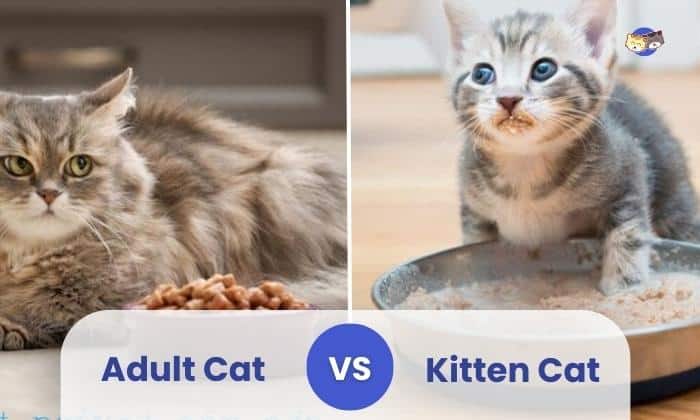
Common mistakes and myths to avoid
When comparing kitten food vs adult cat food, these are the traps I see most.
- Waiting too long to switch. Many owners stay on kitten food past 12 months. This can cause weight gain.
- Free feeding calorie-dense kitten food. This often leads to overeating.
- Assuming all life stages is always best. It can be fine, but portion size is key since it meets kitten needs.
- Ignoring the feeding guide. Start with the guide, then adjust based on your cat’s body condition.
- Skipping wet food. Wet food helps with hydration and weight control.
One more myth: A picky cat will only eat dry food. Often, the issue is texture or smell. Try warming wet food or adding a teaspoon of warm water. Many cats prefer fresh-smelling meals. Some people ask why your cat don't eat dry food. Dry can be hard to chew or less aromatic for some cats.
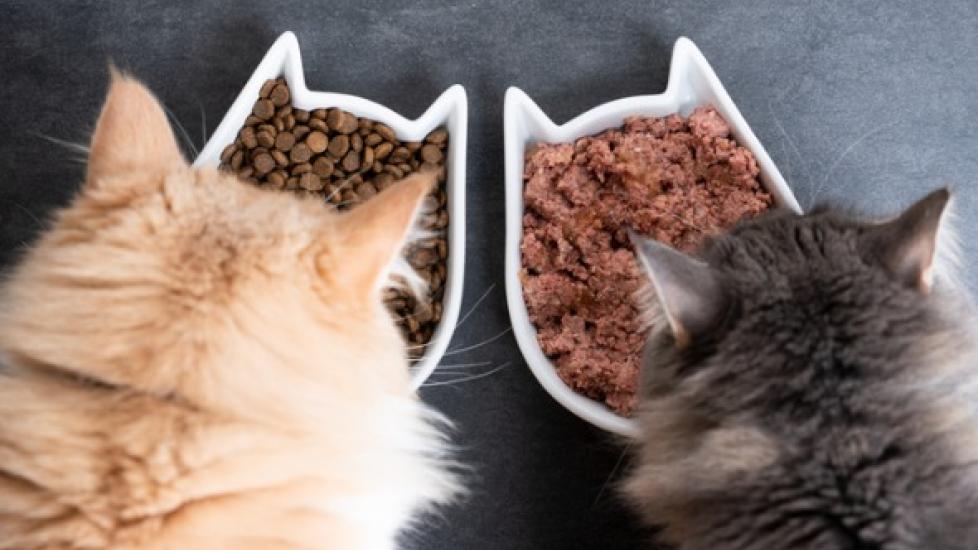
Special cases that affect your choice
Kitten food vs adult cat food decisions can change with health and lifestyle.
Spayed or neutered cats
- Calorie needs drop after surgery.
- Switch to adult food on time and measure portions.
Indoor cats
- Lower activity can mean fewer calories needed.
- Choose adult food with moderate energy density.
Large breed kittens
- Some breeds grow longer and may need growth diets beyond 12 months. Ask your vet.
Underweight adults
- Adult cats who are underweight may need higher calorie adult formulas or vet guidance.
Sensitive stomachs or allergies
- Use limited ingredient diets or hydrolyzed diets under vet care.
Chronic disease
- Kidney, thyroid, or diabetes needs override general advice. Always follow veterinary diets when prescribed.

Wet vs dry across life stages
The debate is not a fight. It is a toolkit. For kitten food vs adult cat food, both formats can work if balanced.
Wet food pros
- Higher moisture supports urinary health.
- Strong aroma helps picky eaters.
- Easier for tiny teeth and seniors.
Dry food pros
- Convenient and budget friendly.
- Useful for puzzle feeders.
- Some dental benefit when paired with dental care.
Practical plan
- For kittens, center meals on wet food with a small amount of dry.
- For adults, mix wet and dry to manage weight and hydration.
- Pick quality first, format second.

Budget and brand selection tips
You can feed well without overspending. Here is how I guide clients when they weigh kitten food vs adult cat food on a budget.
- Compare calories per dollar, not just price per bag or can.
- Choose brands that meet recognized nutrition standards.
- Use loyalty programs or autoship discounts.
- Mix wet and dry to hit cost and hydration goals.
- Avoid trendy additives that add cost without benefit.
My rule of thumb is simple. A mid-range food that meets life stage needs and is fed in the right amount beats a fancy label served in the wrong amount.
Frequently Asked Questions of Kitten food vs adult cat food
When should I switch from kitten food to adult cat food?
Most cats switch at 12 months. Large breeds or slow growers may need growth diets a bit longer with vet guidance.
Is all life stages food the same as kitten food?
All life stages meets growth needs by design. It can be fine, but watch portions since it is often more calorie dense.
Can adult cats eat kitten food?
They can for short times, but long-term use may cause weight gain. It is better to feed adult maintenance for balance.
Do kittens need wet food or is dry enough?
Wet food helps hydration and is easier to chew. A mix of wet and dry often works best for growth and digestion.
How do I know if my cat is at a healthy weight?
You should feel ribs with a light touch but not see them. Your cat should have a visible waist from above and a slight tummy tuck from the side.
What if my cat refuses the new adult food?
Transition more slowly and warm the food to boost aroma. Try a different texture like pate, chunks, or smaller kibble.
Are grain free diets better for kittens or adults?
Not by default. Choose diets based on complete nutrition and life stage needs, not on single ingredients.
Conclusion
Feeding the right diet at the right time sets your cat up for life. Kitten food vs adult cat food is about matching energy and nutrients to growth or maintenance. Choose a life stage diet, read the label, feed measured portions, and transition slowly. You will see better weight, brighter coats, and steadier energy.
Take one action today. Check your bag or can for the life stage statement and adjust your plan if needed. Want more tips and feeding charts? Subscribe for updates or drop a question in the comments.

Leave a Reply