
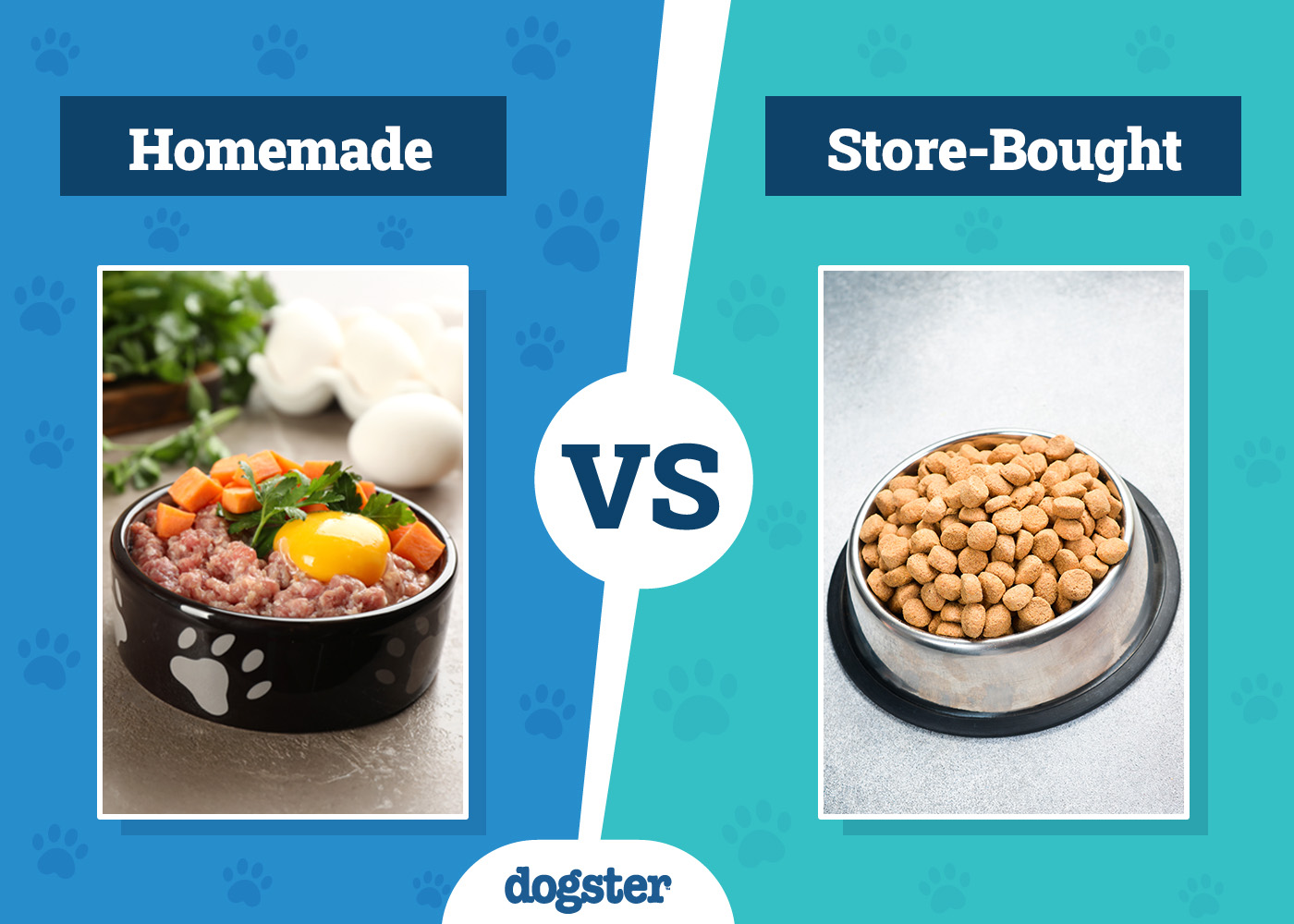
Both can be healthy; the best option depends on your dog’s needs.
If you’re weighing Homemade dog food vs store-bought, you’re in the right place. I’ve helped many pet parents choose a safe, balanced path. Below, I unpack the research, share real-world wins and mistakes, and give clear steps so you can decide with confidence.
What actually decides the better choice
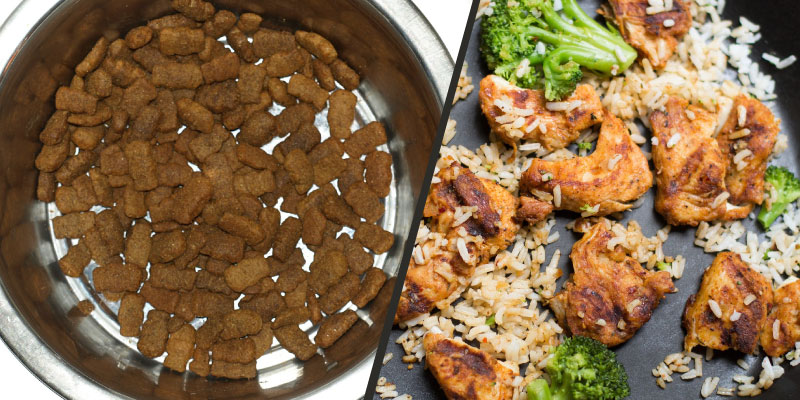
Think in terms of nutrients, not trends. The best diet is the one that is complete, balanced, digestible, safe, and realistic for your routine. A food that meets AAFCO standards and suits your dog’s age, size, and health will usually win, whether it’s in a bag, can, or your fridge. That’s the heart of Homemade dog food vs store-bought.
 homemade dog food”
style=”max-width: 100%; height: auto; border: 2px solid black; border-radius: 10px; display: block; margin: 0 auto;”
loading=”lazy”
/>
Pros and cons of homemade dog food
Homemade dog food can be great when it’s done right. You control the ingredients and the freshness. It can help with allergies or picky eating. It can also deepen your bond.
But imbalance is the big risk. Many online recipes miss key nutrients like calcium, iodine, and certain vitamins. You also need time, safe handling skills, and supplements. That is the honest trade-off in Homemade dog food vs store-bought.
From my own kitchen, my terrier stopped itching when I swapped chicken for turkey and added fish oil. But his stools got soft until I fixed fiber and calcium. That taught me to use vet-formulated recipes, not guesswork.
Pros:
- Full control over proteins, carbs, and fat Helps with allergies and sensitivities.
- Fresh taste and aroma Encourages picky eaters.
- Flexible You can rotate ingredients with guidance.
Cons:
- High risk of nutrient gaps Without a vet nutrition plan and supplements.
- Time and storage needs Batch cooking, weighing, freezing, and labeling.
- Safety demands Proper cooking temps and hygiene to avoid germs.

Pros and cons of store-bought dog food
Good commercial diets are complete and balanced for a life stage. They are tested, consistent, and convenient. Many brands follow strict quality control.
Downsides exist. You have less control over ingredients. There can be recalls. Some dogs dislike certain textures or flavors. The mid-to-high tier can cost more than you expect.
Pros:
- Balanced out of the bag Meets AAFCO nutrient profiles.
- Reliable and easy Great for busy weeks.
- Wide choice Kibble, canned, air-dried, and fresh options.
Cons:
- Less customization May include proteins your dog cannot tolerate.
- Variable quality Not all labels reflect strong testing.
- Marketing noise Hard to sort real quality from claims.
This balance is central to Homemade dog food vs store-bought.

Cost comparison: money and time
I like to plan by a 30-pound adult dog, eating about 800–1,000 calories per day. Your dog may need more or less.
Typical daily cost ranges:
- Economy kibble 1–2.50 dollars per day.
- Mid to premium kibble 2.50–5 dollars per day.
- Canned mixed with kibble 3–6 dollars per day.
- Fresh store-bought meals 5–10 dollars per day.
- Homemade with chicken or turkey 2.50–5 dollars per day plus 0.50–1 for supplements.
- Homemade with beef, lamb, or novel proteins 4–8 dollars per day plus supplements.
Time costs matter too. Expect 1–2 hours weekly for shopping, cooking, weighing, and storing. If time is tight, store-bought may win. If you love meal prep, homemade can compete on value. Price is a major tie-breaker in Homemade dog food vs store-bought.
Health and nutrition: hitting every nutrient
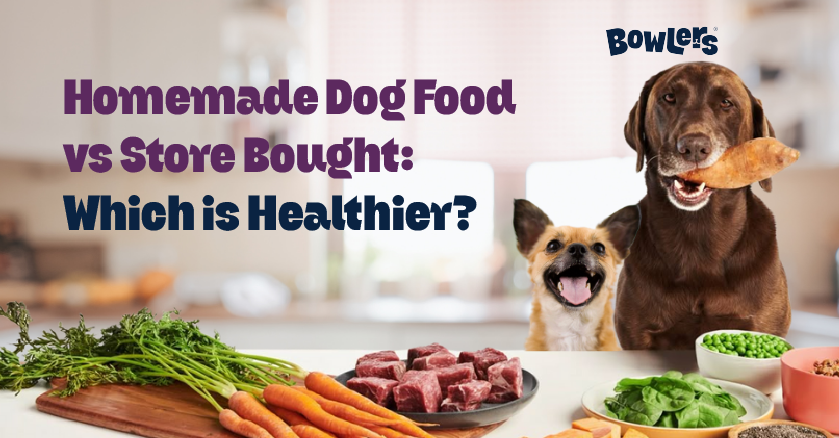
Dogs need the right energy, protein, fat, vitamins, and minerals. AAFCO sets minimums for adult maintenance and growth. Puppies and pregnant dogs need higher levels. Senior dogs may need adjustments.
Research has found that most DIY recipes online lack one or more nutrients. Common gaps include calcium, vitamin D, vitamin E, iodine, copper, zinc, and omega-3 fats. Too little calcium or too much phosphorus can harm bones and kidneys over time.
For homemade diets:
- Use a recipe formulated by a veterinary nutritionist.
- Add the exact supplements the recipe requires.
- Recheck calories and weight every 2–4 weeks and adjust.
For store-bought diets:
- Look for the AAFCO statement for your dog’s life stage.
- Prefer foods tested in feeding trials when possible.
- Choose clear ingredients and a brand that shares quality control info.
This is the core science behind Homemade dog food vs store-bought.
Safety, storage, and kitchen hygiene
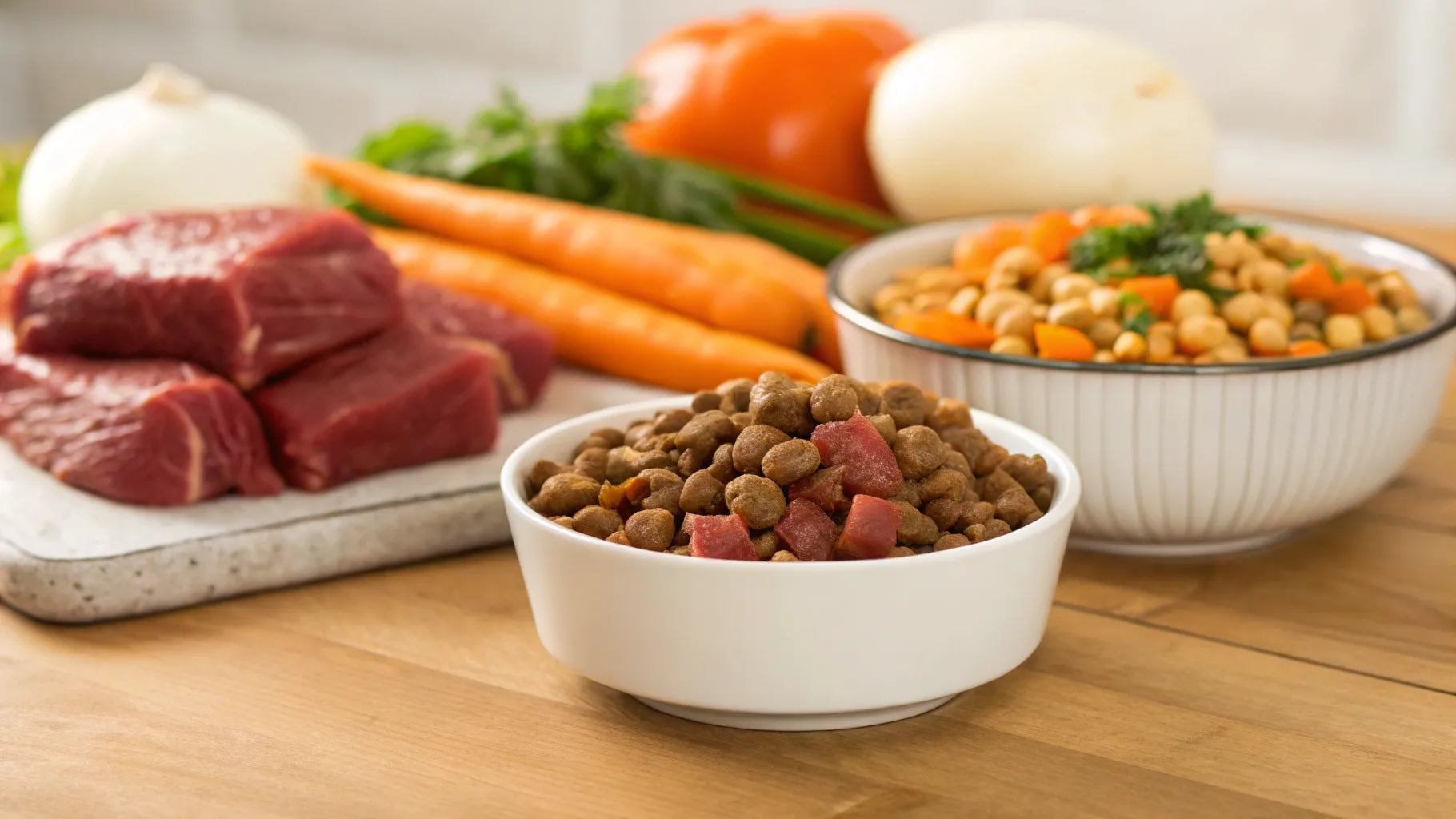
Food safety protects pets and people. Handle raw ingredients with care. Use separate boards for meat and veg. Wash hands and tools well.
Basic safety tips:
- Cook poultry to 165°F and ground meats to 160°F.
- Refrigerate cooked food within 2 hours. Use within 3 days.
- Freeze portions for up to 2–3 months. Label dates and calories.
- Reheat to steaming. Do not microwave bones.
- Keep dogs away from onions, garlic, grapes, raisins, chocolate, alcohol, xylitol, and macadamia nuts.
These steps matter for both Homemade dog food vs store-bought, since you still store and serve commercial foods.
Transition plan: switching without tummy trouble
Switch slowly over 7–10 days. Start with 25 percent new food. Then move to 50, 75, and finally 100 percent. Watch stool, gas, and energy. Slow down if you see loose stool.
Helpful extras:
- A dog-safe probiotic can support the gut.
- Plain canned pumpkin can add gentle fiber.
- For dogs with past pancreatitis, go slow and stay low-fat. Ask your vet first.
A gentle plan prevents upset during Homemade dog food vs store-bought changes.
When homemade shines vs when store-bought wins
Homemade shines when:
- Your dog has multiple food allergies and needs a custom plan.
- You need a novel protein not in stores.
- You enjoy cooking and can follow a precise recipe with supplements.
Store-bought wins when:
- You need reliable balance with zero prep.
- You have a puppy or a pregnant dog where mistakes are risky.
- Your schedule is packed and consistency is key.
Use these moments to decide the best path in Homemade dog food vs store-bought.

A simple, safe framework for homemade meals
This is a starting framework, not a complete recipe. Always use a vet-formulated plan and the right supplements for balance.
General framework for an adult dog:
- Lean cooked protein About 40 percent of calories from turkey, chicken thigh, lean beef, eggs, or fish.
- Cooked carbs About 40–50 percent from rice, oats, barley, or potatoes.
- Veg and fruit About 10 percent from cooked carrots, green beans, spinach, pumpkin, blueberries.
- Healthy fats Add fish oil for EPA/DHA. Adjust added oils based on your recipe.
- Supplements Calcium, a canine multivitamin, and trace minerals as directed by your nutrition plan.
Example meal idea:
- Cooked ground turkey, white rice, and steamed carrots with fish oil and a calcium source.
- Mix, weigh portions, and freeze daily packs.
- Confirm amounts and supplements with your vet or a nutritionist.
This makes Homemade dog food vs store-bought less scary and more structured.
How to read store-bought labels like a pro
Labels can be confusing. Focus on a few key lines.
What to check:
- AAFCO statement Says complete and balanced for adult maintenance, growth, or all life stages.
- Feeding trials Prefer foods proven in trials over formulation-only, when you can.
- Protein source Look for named meats like chicken, beef, salmon.
- Guaranteed analysis Protein and fat should suit your dog’s needs.
- Calorie content Helps you feed by calories, not cups alone.
By-products can be fine if sourced well, but transparency helps. This smart reading improves Homemade dog food vs store-bought decisions.
Frequently Asked Questions of Homemade dog food vs store-bought
Is homemade dog food healthier than store-bought?
It can be, but only if it is balanced and safe. Many DIY diets miss key nutrients without the right supplements.
How do I know if a commercial food is good?
Look for an AAFCO complete and balanced statement for your dog’s life stage. Brands that run feeding trials and share testing data inspire trust.
Can I switch between homemade and store-bought?
Yes, many dogs do well with a hybrid plan. Transition slowly and keep total calories and nutrients consistent.
What supplements do homemade diets need?
Most need calcium, vitamin D, vitamin E, iodine, and omega-3 fats. Use a veterinary-formulated recipe so doses are correct.
Are raw diets safe?
Raw can carry harmful germs for pets and people. If you choose raw, work with your vet and follow strict hygiene and storage rules.
Is kibble bad for dogs’ teeth?
Kibble may help a little, but it is not a full dental plan. Use vet-recommended chews and brushing for real results.
How much does homemade food cost compared to kibble?
It ranges from similar to more, depending on proteins and supplements. Time costs also matter for meal prep and storage.
Conclusion
Both paths can work. The winner is the plan you can do well, day after day, with complete nutrition and safe handling. Start with your dog’s health needs, your time, and your budget.
If you try homemade, use a proven recipe and the right supplements. If you choose store-bought, pick a balanced food and feed by calories. Either way, track weight, stool, skin, and energy to spot wins early.
Ready to choose your path in Homemade dog food vs store-bought? Share your dog’s details in the comments, subscribe for more guides, and take the first step toward a safe, happy bowl today.

Leave a Reply